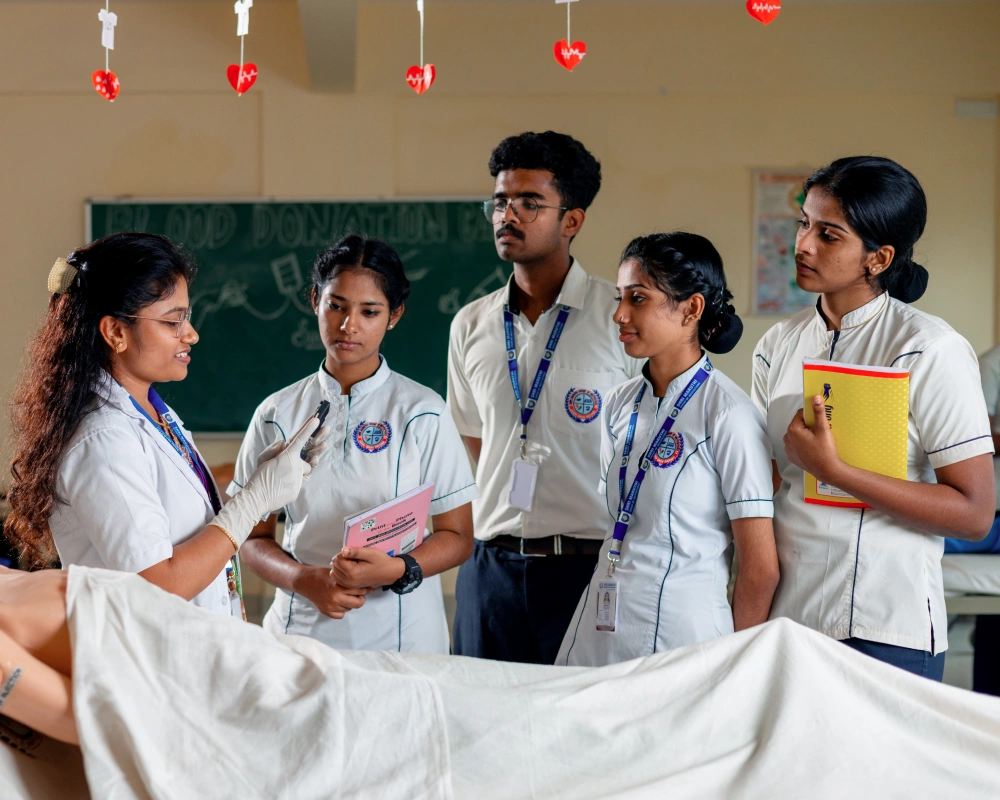
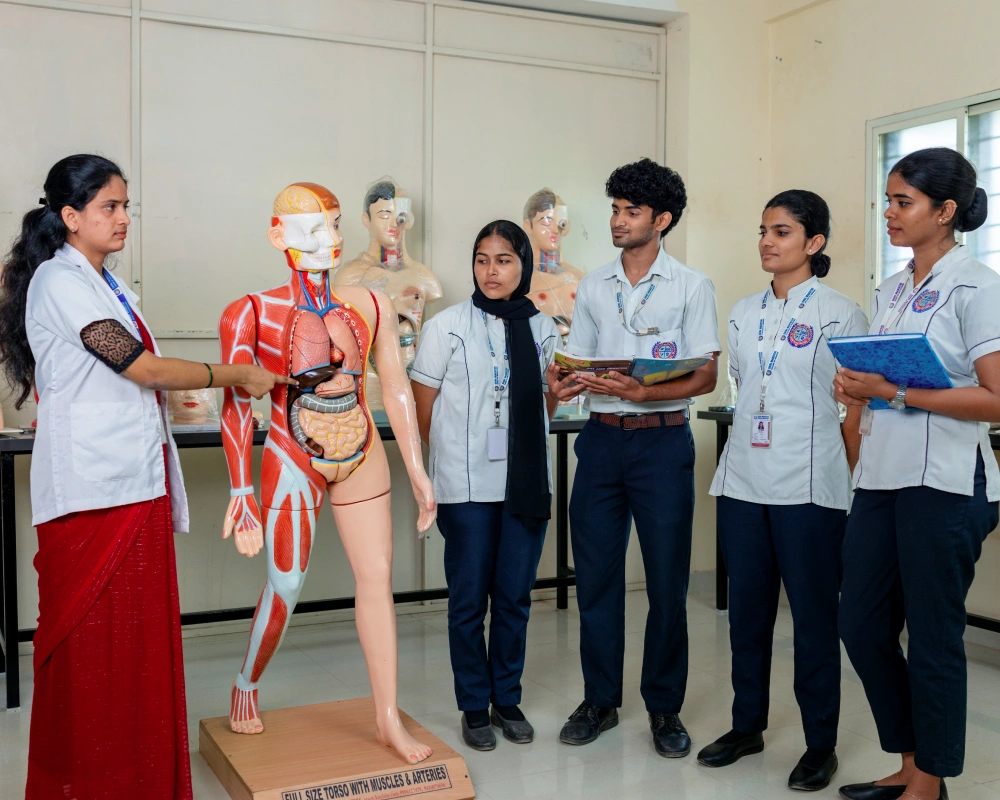
Nursing education prepares individuals to become capable healthcare professionals who balance medical knowledge with compassion and professional responsibility. The programs aim to build a solid academic base while gradually familiarizing students with real clinical settings, where learning takes place through observation, supervised practice, and hands-on experience. Attention is given to understanding patient needs, supporting recovery, and delivering care with respect for safety, ethics, and human dignity.
As students progress, classroom learning is closely connected with clinical training, helping them apply concepts in practical healthcare situations. Exposure to hospitals, specialized departments, and community health services provides a clear understanding of how healthcare systems function in everyday practice. During this process, students strengthen communication skills, teamwork, problem-solving abilities, and confidence in handling varied patient care situations.
The programs also support professional development by encouraging leadership qualities, awareness of research, and a commitment to lifelong learning. This approach prepares graduates to work effectively in healthcare environments while opening pathways toward clinical practice, community service, teaching roles, administrative responsibilities, and further academic advancement in nursing.